The sounds of laughing and banging and bouncing echo well beyond the entrance to the SEE Science Center. Located squarely in the mill district in downtown Manchester, the SEE Science Center—currently celebrating its 40th anniversary—is a fixture of fun and learning in the Queen City.
“Our mission is to engage our community in the joyful, active exploration of science and innovation,” says Executive Director Shana Hawrylchak. “The key word for us is ‘joy.’ We want people to think of learning as a fun experience, because so often it gets equated with tests or drudgery. But learning is fun!”
Learning is fun — and we agree. Which is why a partnership between the SEE Science Center and CMF Kids made all the sense in the world.
“We’re the sort of space that’s designed to reach people of all abilities,” Shana says. “We are already developed to reach many developmental ranges and physical abilities, so it’s a natural space to welcome the disability community.”
To augment that welcoming atmosphere, CMF Kids embarked on a special partnership project to help the SEE Science Center become more sensory-friendly. The learning space is loud and boisterous, and for children with autism, this clatter can sometimes be distressing. But they’re still there to have big-time fun — so what’s the solution?
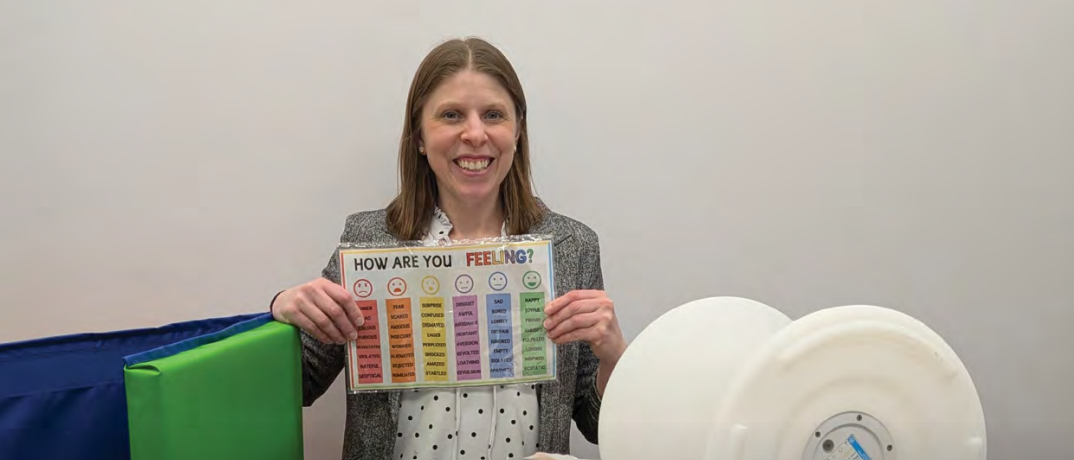
“The Crotched Mountain partnership allowed us to get sensory materials to help folks with self-regulation or just aid them in calming periods,” Shana says. “These materials will allow them to enjoy a full visit because they can take time away, get themselves reoriented, and then go and explore more.”
In addition to self-regulation, these sensory materials support touch, sight, sound, and movement, enhancing the visitor and learning experience for children. Thanks to CMF Kids — and you, the donors who make this all happen — the SEE Science Center now has a mobile cart equipped with a diverse array of sensory-sensitive equipment, including weighted items, fidget toys, lighting elements, and much more.
“This partnership allows us to make sure that we can get more children, youth, and adults to be able to visit this space in a comfortable way where they’re going to have a safe learning environment,” Shana says. “It helps bring people who have different abilities together and makes public spaces even more welcoming.”